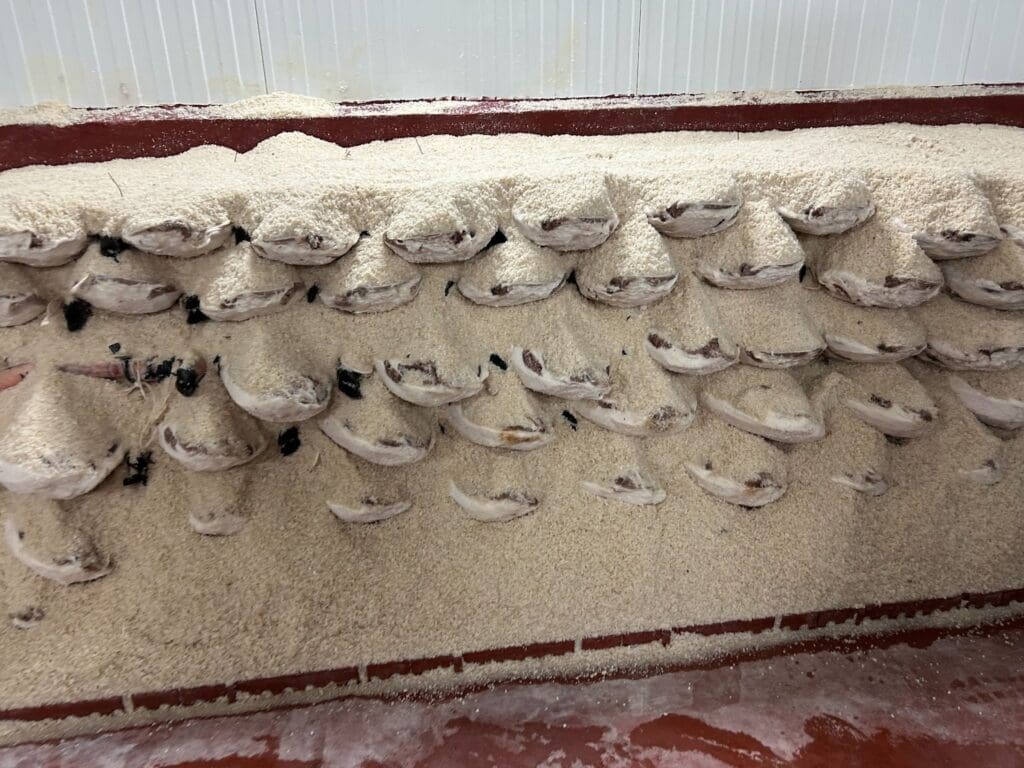
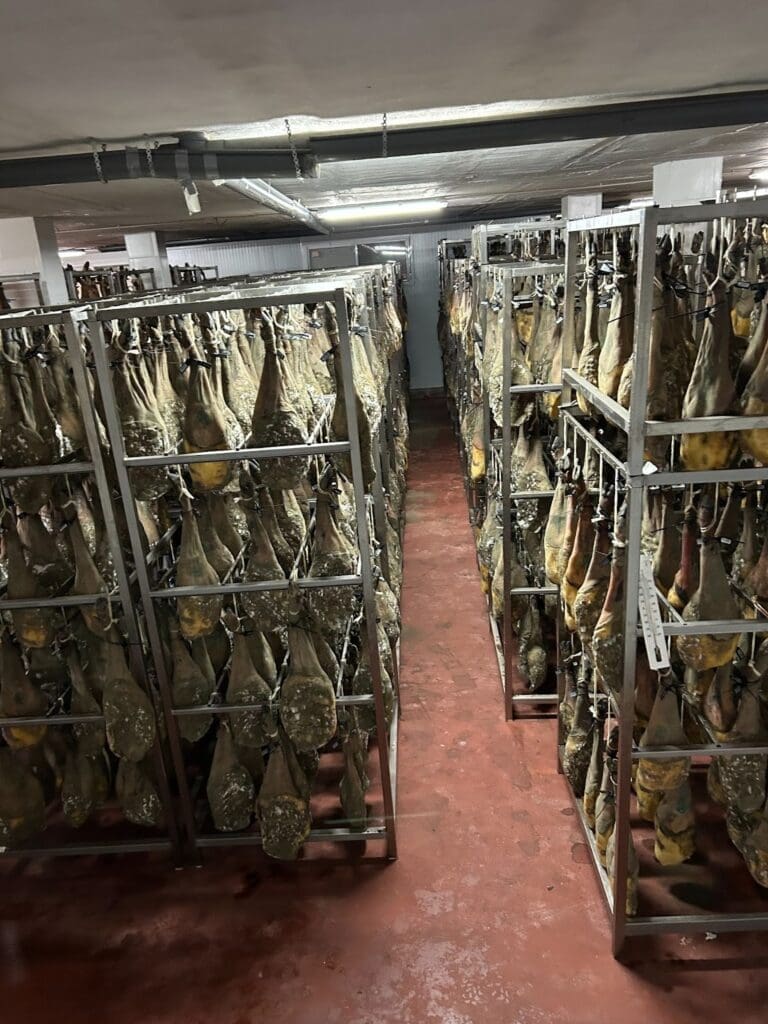
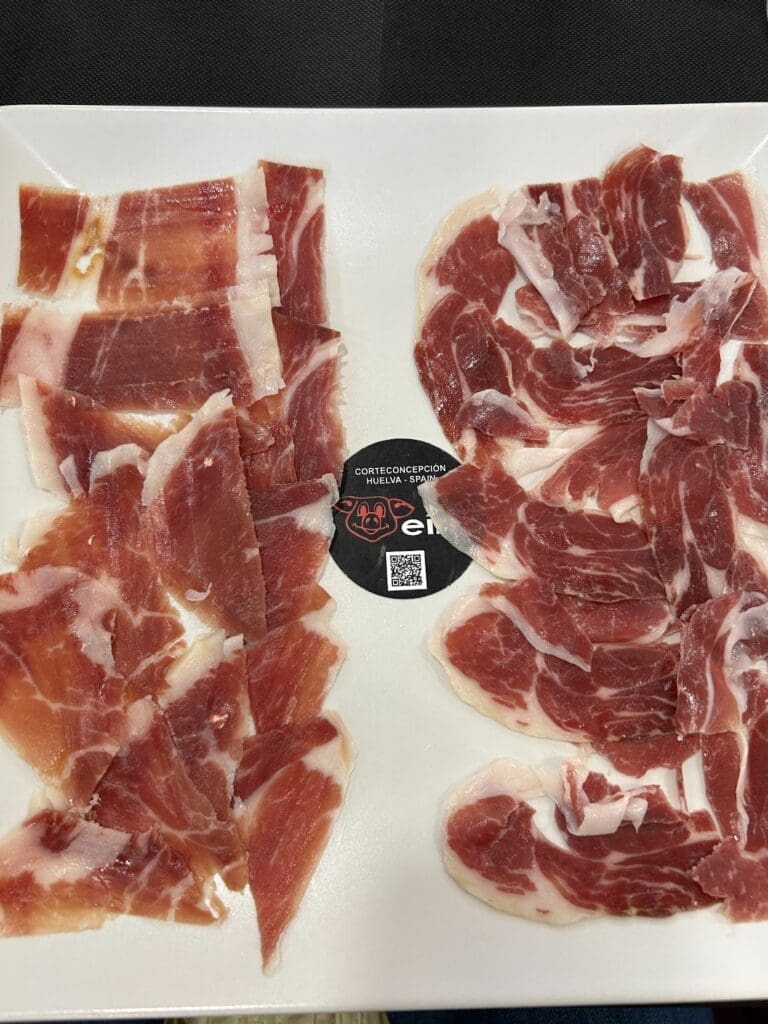
Walking the streets in Spain, almost everywhere you go, you find one piece of meat hanging in the butcher shop, local cafe, or restaurant. For many Spaniards, this is a rich tradition and heritage passed down for centuries, which is known all across the world. Iberian Ham. Just one piece of shoulder that you see hanging costs hundreds of dollars. What makes this meat the highest priced pork across the world? The name comes from the breed. These hogs are raised on acorns, which make the meat sweeter. Additionally, the acorns make the fat melt and liquify when it reaches room temperature. The hogs are harvested at two years old. Then, after being processed, the parts are separated, and the shoulders are set in a cooler filled with salt, and these shoulders are covered in salt for two weeks. Finally, they are moved to a hanging room for nearly 3 years. As the meat hangs, it grows mold on the outside. To control the amount of mold grown on the casing of the pork they paint sunflower oil on the outside of the meat to minimize the production of mold grown on the meat. During those 3 years, the shoulder loses half of its weight. Finally, after meticulous care and attention to this piece of ham for three years, it is finally ready to be sold and consumed, explaining the expensive price tag. It is enjoyed in paper-thin slices, either by itself or on a piece of bread with tomato and olive oil. Before you eat this specialty, you are instructed to place the meat on the top of your hand, then cover it with your other hand to melt the fat. Iberian ham is rich in flavor and tradition, a delicacy and a piece of meat that represents culture, legacy, heritage, and agriculture.